
Biomorphic design: returning to nature-informed spaces
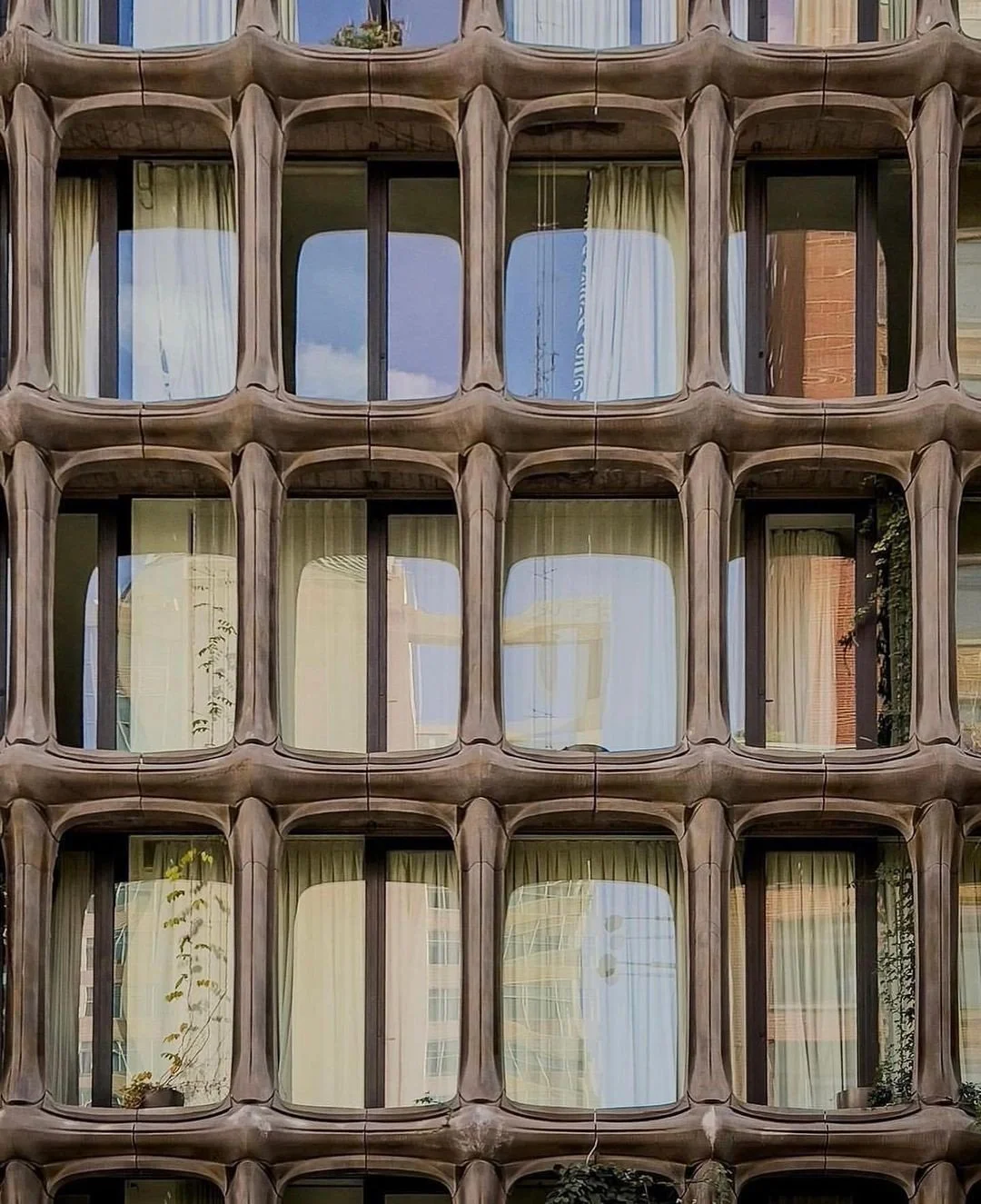
Antoni Gaudí translated bone structure and root systems directly into facades and staircases.
Overview
Biomorphic design — architecture and interiors built on the logic of organic form — is moving from cultural niche to mainstream aesthetic, and the hospitality and real estate brands that catch the wave early will define the next decade of WellBeing properties.
The body recognizes organic form before the mind names it. Curve, irregularity, and asymmetry release a layer of nervous-system vigilance that hard-edged spaces silently require. The biomorphic shift is a recovery move, not a stylistic trend.
For operators, the strategic implication isn't to add organic motifs to a finished interior. It's to design a coherent form language that runs across architecture, materials, lighting, and product — the discipline that turns biomorphic from a look into a system.
The aesthetic at its peak inverts. The body is recovering its preferences.
For most of the last two decades, the dominant aesthetic of luxury hospitality and residential real estate has been minimal, rectilinear, and engineered. Scandinavian neutrality. Hotel grids. Concrete-and-glass premium. The aesthetic was a response to its own predecessor — a recoil from the cluttered, overdesigned interiors of the late twentieth century — and at its best it produced spaces of real clarity. At its peak, like any aesthetic, it began to invert. The clean line became the cold line. The minimal room became the room that asked the guest to perform calm rather than feel it. The grid that promised order quietly began to register, in the body, as constraint.
Biomorphic design — architecture and interiors built on the logic of organic form, curve, asymmetry, and irregularity — is rising precisely because the rectilinear aesthetic has reached the end of its arc. The shift is already visible in the work being commissioned at the top of the market. Hotels designed without right angles. Residences built with the proportions of cave or shell rather than box. Furniture that reads as bone or root or coral. Lighting that diffuses through fabric the way light passes through skin. This is not a trend. It is a recovery — the body, having spent two decades in environments engineered against its own form, beginning to demand environments that match.
The lineage is older than the moment. Ernst Haeckel's Kunstformen der Natur (1904) — meticulous illustrations of radiolaria, jellyfish, and microscopic sea life — gave designers and architects a visual vocabulary they have been working from for more than a century. Antoni Gaudí translated bone structure and root systems directly into facades and staircases. Marc Newson's Lockheed Lounge, Iris van Herpen's grown-rather-than-sewn dresses at the Brooklyn Museum, the bone-and-fungus furniture of contemporary designers — all of it sits inside the same lineage. The lineage was always there, working quietly underneath the rectilinear era. What is changing now is its return to the centre of the cultural frame.
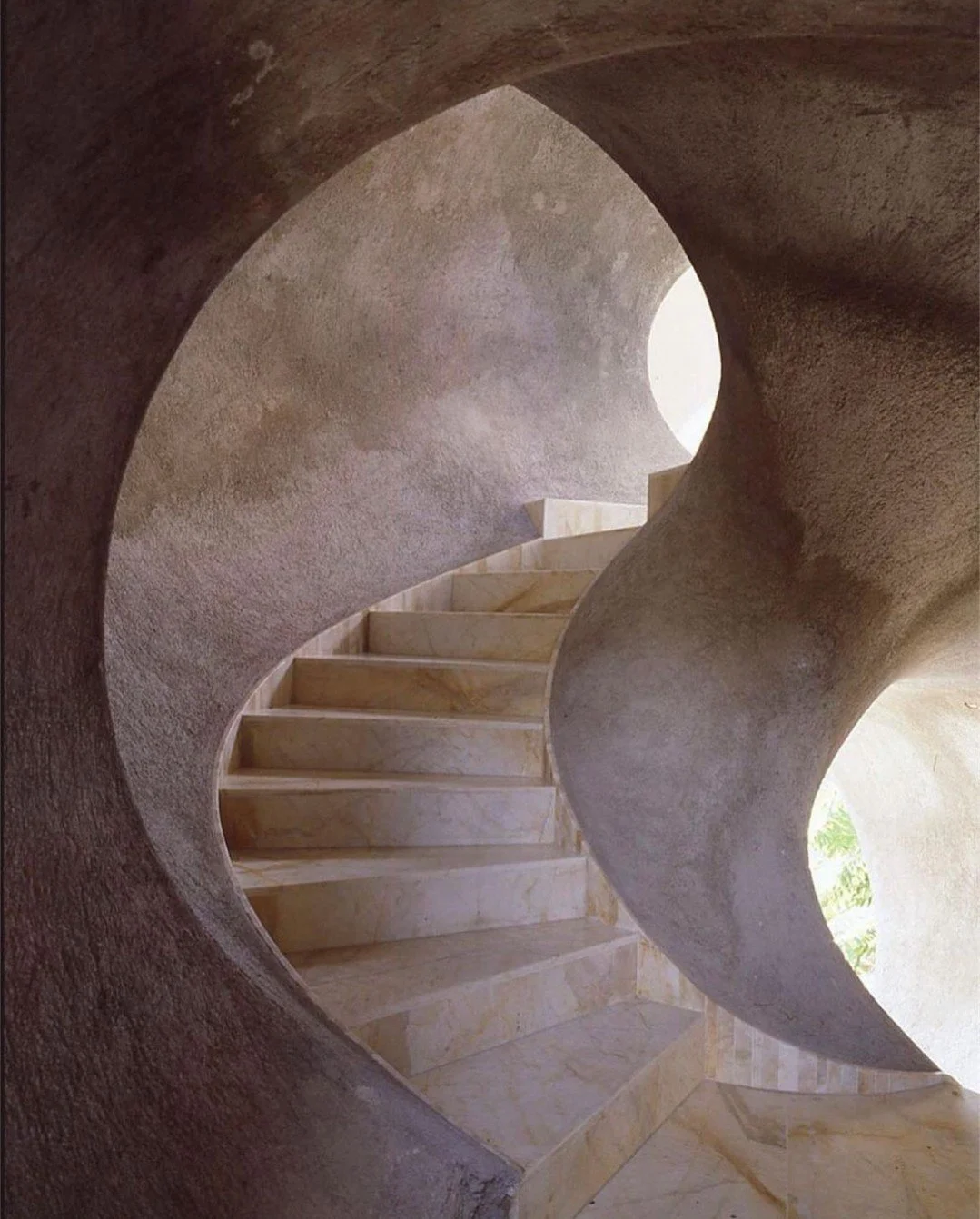
Interior architecture that treats movement as a curve, not a corner. The staircase opens like a chambered nautilus; the body walking through it is asked to spiral rather than turn. Plaster carries the hand of the maker; marble carries the body of the guest.
Why the body reads it differently
The reason biomorphic design produces a measurable difference in how a space feels is not aesthetic preference. It is neurological. The visual system evolved over hundreds of thousands of years inside organic environments — forests, coastlines, caves, savannahs — and the brain's pattern-recognition machinery is calibrated to those forms. Curves, fractals, asymmetric balance, irregular intervals, and the kind of soft visual complexity that nature produces effortlessly are read by the nervous system as safe and legible. Hard right angles, perfectly repeating intervals, and high-contrast geometric edges produce a low-level cognitive load the conscious mind does not usually register but the body absolutely does.
In practical terms, a guest in a rectilinear, engineered room is — at the level of the nervous system — running a constant background process of mild vigilance. In a biomorphic space, that process quiets. The body, given a room it recognizes, lets go of the work of being on alert. Whatever else the guest came for — restoration, presence, the experience the brand promised — becomes possible only after that release. The biomorphic move is not a finishing layer over a wellness program. It is the precondition the program depends on.
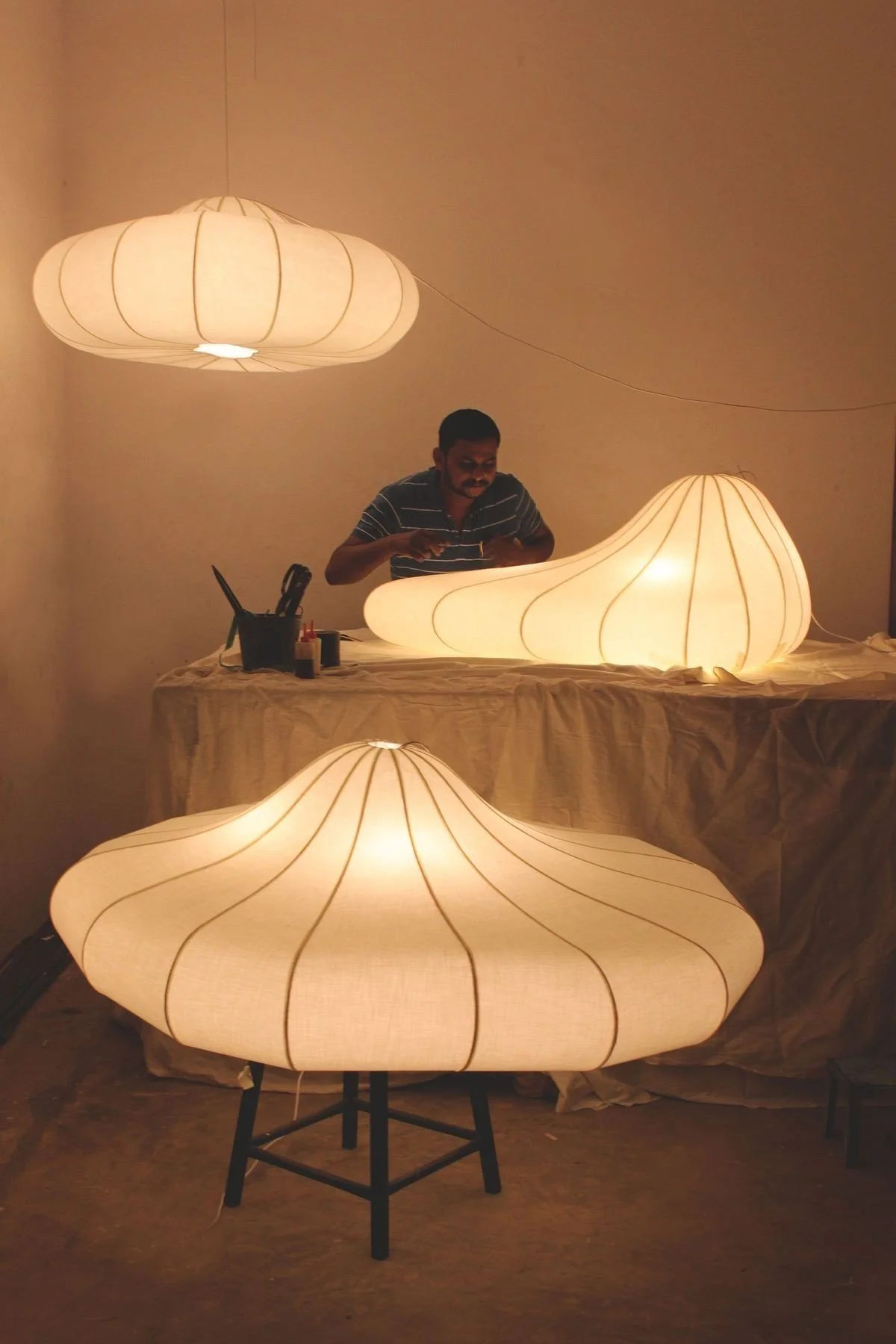
Soft form, hand-stitched. The pendants take the shape of seedpods, jellyfish, or breath — light diffused through fabric the way light passes through translucent tissue. The biomorphic logic at the scale of the object, and visibly, the hand of a maker holding it.
In Practice
The most common mistake operators make with biomorphic design is treating it as decorative motif. Adding a leaf print to a wall. Commissioning a single sculptural lobby piece. Specifying one curved sofa in an otherwise rectilinear room. These moves are visible but they do not produce the felt difference, because the body reads the coherence of the form language across surfaces, not the presence of any single biomorphic gesture.
Five places to start, for operators serious about the shift:
Form language across surfaces, not biomorphic motif. The discipline is choosing one organic logic — a curve, a proportion, a structural reference — and running it consistently from the building facade through to the door handle, the light fixture, the bathroom fittings. Coherence is the unlock; isolated biomorphic objects in a rectilinear shell read as expensive decoration.
Material with grain, weight, and irregularity. Travertine, oiled wood, hand-finished plaster, hand-woven fibre, natural stone. The body reads the difference between a surface that records the hand of a maker and a surface that conceals it. Engineered uniformity is the rectilinear era's signature; visible irregularity is the biomorphic era's.
Asymmetric proportions and varied scale within the building. Alcoves, varied ceiling heights, rooms whose dimensions do not match each other, transition spaces between primary rooms. The grid of identical rectangular rooms is the body's least preferred condition. Architectural variety is biomorphic at the spatial scale.
Lighting that diffuses rather than directs. Biomorphic lighting is fabric, paper, alabaster, frosted glass — soft envelopes that filter light the way leaves and skin filter it. Recessed downlighting and engineered LED grids belong to the rectilinear era; they read as functional rather than felt.
Visible craft in at least one prominent layer. Hand-thrown ceramics in the breakfast service, hand-woven textiles in the bedding, hand-poured plaster on a primary wall, hand-stitched lighting fixtures. One visible layer of human craft anchors the biomorphic claim and prevents the space from drifting into algorithmic-organic territory — the AI-rendered biomorphic look that is already saturating the trend cycle.
Implication: form language is the new defensible asset.
Most operators in hospitality and wellness real estate over the next five years will respond to the biomorphic shift the way they respond to every aesthetic shift — by adding signature pieces and tagging the look. The brands that build durable equity will do the harder thing: choose one organic form language, run it across every surface and scale of the property, and refuse to dilute it. That coherence is what compounds, and what the body reads. The biomorphic turn rewards the operators willing to design at the level of system rather than the level of accent.
Learn more
If you're building hospitality or real estate where the goal is for the body to recognize the room before the mind names it — somewhere coherent at the level of form, not finish — let's talk.
