
An ancient principle revived by Carl Jung explains WellBeing experience design
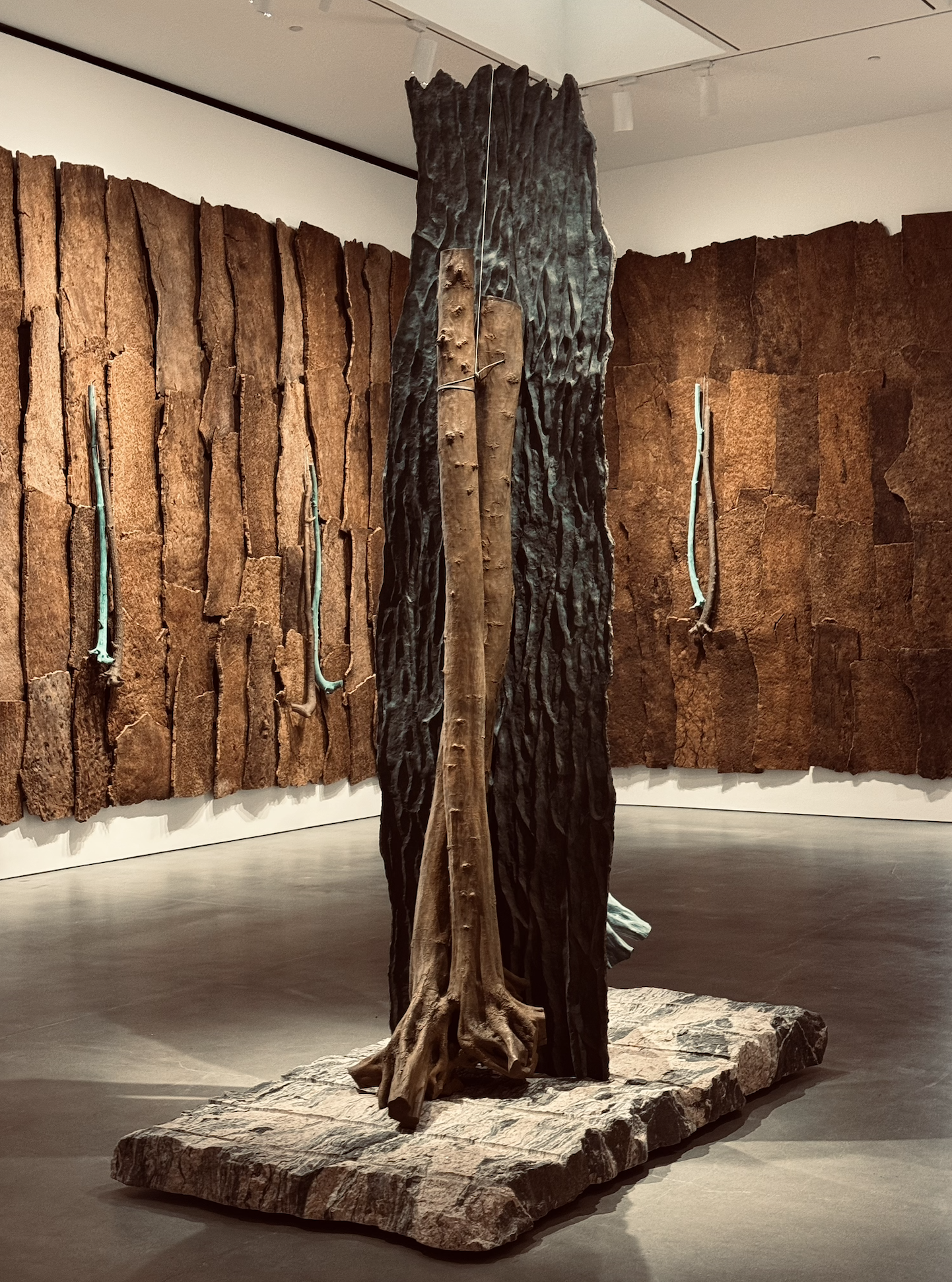
Marsia (Marsyas) // Giuseppe Penone Bronze, 2024
Installation view at Giuseppe Penone: The Reflection of Bronze, curated by Adam D. Weinberg, Gagosian, 555 West 24th Street, New York, April 22 – July 2, 2026.
Overview
Enantiodromia is an ancient principle, named by Heraclitus and revived by Jung: anything pushed to its extreme tends to become its opposite.
Wellness, at its peak, inverted into performance — the more we strive to be well, the further we drift from being.
For operators building hospitality, wellness, and real estate: real wellbeing emerges when a space lets people stop performing.
The space that asks less is the space that delivers more.
Wellbeing isn't reached. It emerges.
There is an ancient idea, named by Heraclitus and revived two and a half millennia later by Jung, called enantiodromia — the tendency of anything, pushed to its extreme, to become its opposite. Day tips toward night at the brightest point of its arc. The bow at its fullest tension is the instant before release. Heraclitus saw it standing at the edge of a river: water always moving, a form that only looks still. The deeper current always runs against the surface.
The pattern worth the most attention right now, for anyone building in hospitality, wellness, or real estate, is the inversion of wellness itself. It began as a turn away from the grind — a way to recover what the productivity decades had stripped out. At its peak, it became its own grind. Tracking. Protocols. Morning routines performed for an audience. Identity built around how well one performs being well. The thing that promised relief from striving became one more arena to strive in.
Two artists currently exhibiting in New York make the inversion legible in another medium. Helen Frankenthaler painted by pouring thinned color onto raw, unprimed canvas and letting it soak in — pigment finding its own edges, settling where it wanted to settle. Almost nothing in her work was forced. The image was not laid onto the surface; it rose up through it.
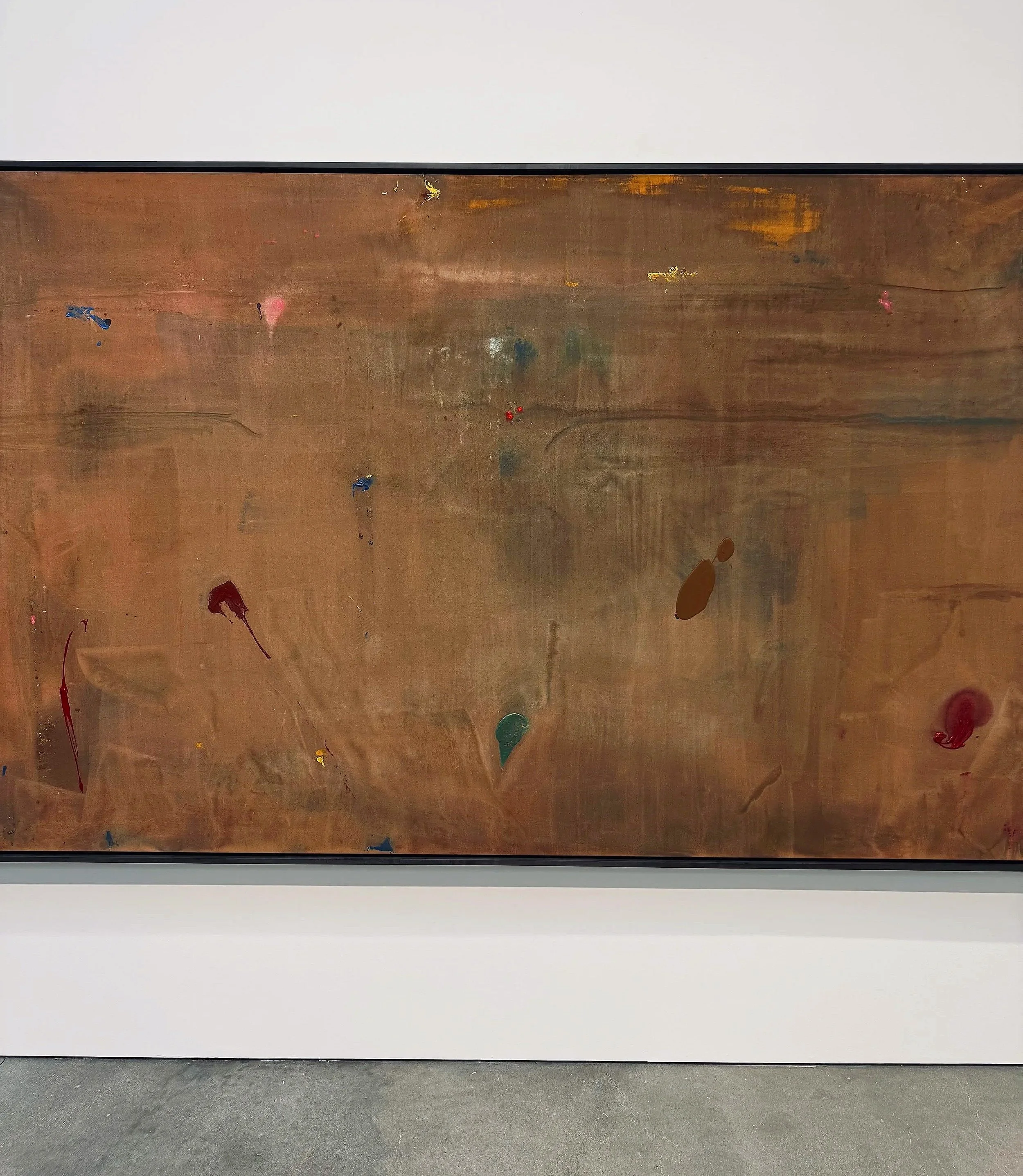
Helen Frankenthaler: The Moment and the Distance
In a separate room, Giuseppe Penone had carved backward through a milled timber beam to free the sapling still held inside the older wood. He did not build the tree. He removed what time had laid over it. Two materials, two artists, one principle. Each created the conditions and let something already true rise to the surface. Neither reached. That is precisely why the work holds what it holds.
If wellness at its peak became performance, real wellbeing is the current running the other way. It arrives when the system finally settles enough to stop performing, when the body is at ease enough that the version of the self underneath the effort can surface. This is what the best spaces understand and what most of what gets built in the name of wellness will keep missing.
A great space asks nothing of the guest. It arranges light, material, proportion, and ritual so the system settles on its own — and once it settles, the real self rises up through, the way the image rises through the canvas.
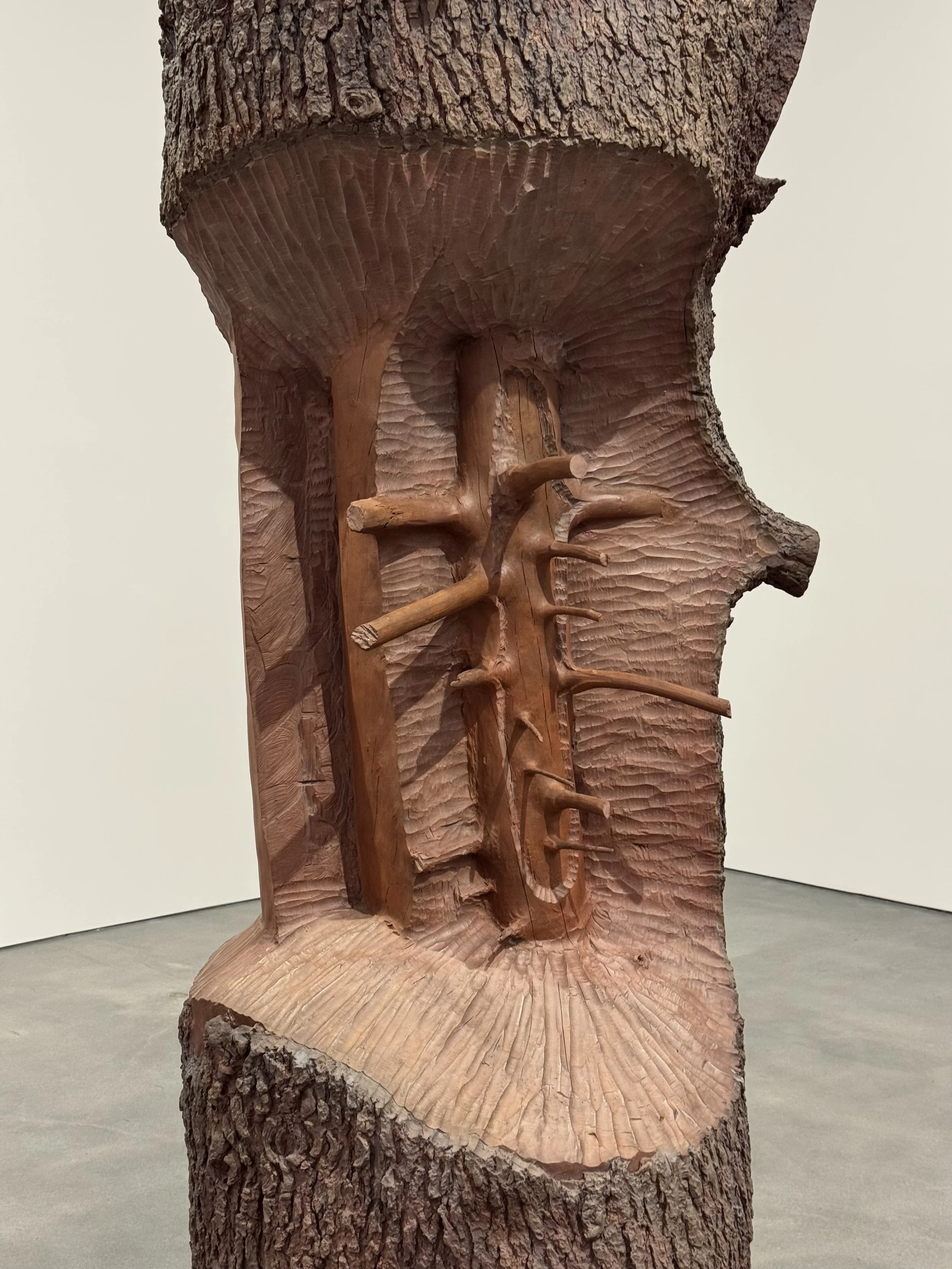
Giuseppe Penone at Giuseppe Penone: The Reflection of Bronze,
Where the inversion shows up
Hustle culture inverted into burnout culture; the productivity decade ended in a sleep crisis.
The global wellness economy has grown past $5 trillion annually while reported anxiety, sleep disturbance, and burnout have risen in parallel rather than fallen.
Hospitality that markets stillness, presence, and slowness now engineers for throughput, dynamic pricing, and check-in efficiency.
Minimalism inverted into "quiet luxury" — minimalism as maximum signaling.
The productivity religion is quietly inverting into a rest economy: sleep aids, retreats, and recovery framed as the new performance edge.
Building for emergence: where to start
The next decade of WellBeing hospitality, wellness, and real estate will not be won by the operators who add more amenities or program more rituals. It will be won by the ones who design for emergence. Five places to begin:
Programming that opens space rather than fills time. The default in wellness hospitality is to schedule the guest's day. The inversion is to leave space the guest is not expected to use — rooms with nothing happening in them, hours with no programming, permission to skip what was offered.
Arrival flows that don't require performance. Most check-ins ask the guest to be on — greeted, oriented, given the script. The inversion is an arrival that does not ask the guest to be anyone yet. Minimal interaction. Materials they discover on their own. The first signal that nothing is expected of them.
Design language that signals you can stop. Wellness aesthetics often signal you should be performing this lifestyle. The inversion uses material, light, and proportion to signal you are allowed to do nothing here. Subtle, but the body reads it instantly.
Pricing and access that don't manufacture scarcity-anxiety. Membership tiers, waitlists, and engineered exclusivity put the nervous system in performance mode before the guest has arrived. Structures that earn loyalty without weaponizing pressure are doing the harder, more durable work.
Hiring for presence, not throughput. Front-of-house staff trained in efficiency cannot deliver emergence. Staff trained to be unhurried and quietly attentive can — and this is increasingly the variable that operators are getting wrong.
Implication: emotional equity compounds where pressure does not.
The brands that understand this will compound emotional equity their price-driven competitors cannot replicate. The ones still adding amenity decks will be outpaced by the ones designing for what surfaces when nothing is demanded.
Learn more
If you're building a hospitality or real estate project where the goal is for people to finally stop performing — somewhere the real self has space to surface — let's talk.
